
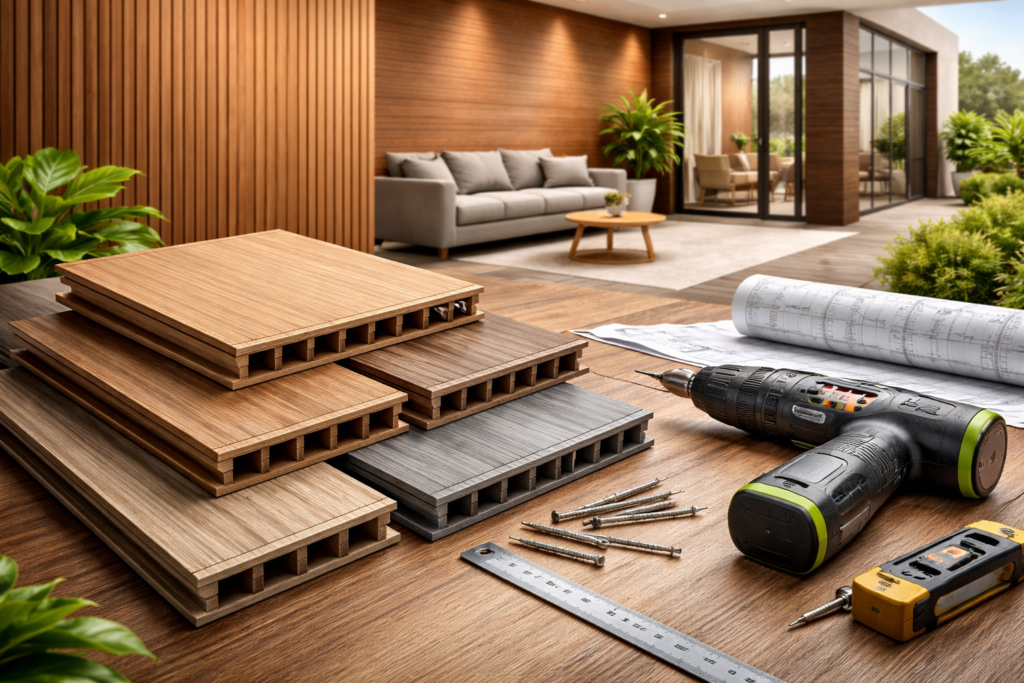
What is WPC Wall Panel? A Complete Guide to Wood Plastic Composite Wall Cladding
In modern architecture and interior design, WPC wall panels have become an increasingly popular alternative to traditional materials such as solid wood, PVC panels, and stone cladding. Combining durability, aesthetics, and environmental benefits, WPC panels are widely used in residential, commercial, and architectural projects.
This guide explains what WPC wall panels are, how they are made, their advantages, and where they are commonly used.
What is a WPC Wall Panel?
A WPC wall panel (Wood Plastic Composite wall panel) is a composite building material made from a blend of natural wood fibers, recycled plastics, and performance additives. These materials are combined through high-temperature extrusion to create strong, durable, and decorative panels used for interior and exterior wall cladding.
The composition of a typical WPC wall panel includes:
- Wood fiber or wood powder – provides natural texture and appearance
- Thermoplastics (HDPE, PVC, or PP) – provide strength and moisture resistance
- Additives – improve UV resistance, color stability, and durability
The result is a material that maintains the natural beauty of wood while offering the performance benefits of modern polymers.
Key Characteristics of WPC Wall Panels
WPC wall panels are designed to deliver long-term performance in both indoor and outdoor environments. Some of the most important characteristics include:
Durability
WPC panels are highly resistant to moisture, insects, rot, and corrosion, making them suitable for areas where natural wood may deteriorate quickly.
Low Maintenance
Unlike traditional wood cladding, WPC wall panels do not require painting, staining, or frequent sealing. Occasional cleaning is usually enough to maintain their appearance.
Environmental Sustainability
Many WPC products use recycled plastics and wood waste, helping reduce environmental impact while extending the life cycle of raw materials.
Weather Resistance
High-quality WPC panels are engineered to withstand rain, humidity, sunlight, and temperature fluctuations without cracking or warping.
Aesthetic Versatility
Modern manufacturing techniques allow WPC panels to feature realistic wood grain textures, embossed surfaces, and a wide range of colors, enabling designers to achieve both classic and contemporary styles.
Types of WPC Wall Panels
Depending on the structural design and application, WPC wall panels are typically available in several types:
Hollow Core WPC Panels
Hollow panels are lightweight and cost-effective. They are widely used for decorative walls and large-area cladding because they reduce installation weight while maintaining structural integrity.
Solid Core WPC Panels
Solid panels offer higher density and strength, making them ideal for projects that require stronger impact resistance and a more premium feel.
Fluted or Grooved WPC Panels
Fluted panels feature a modern ribbed surface design that is popular for feature walls, architectural facades, and commercial interiors.
Common Applications of WPC Wall Panels
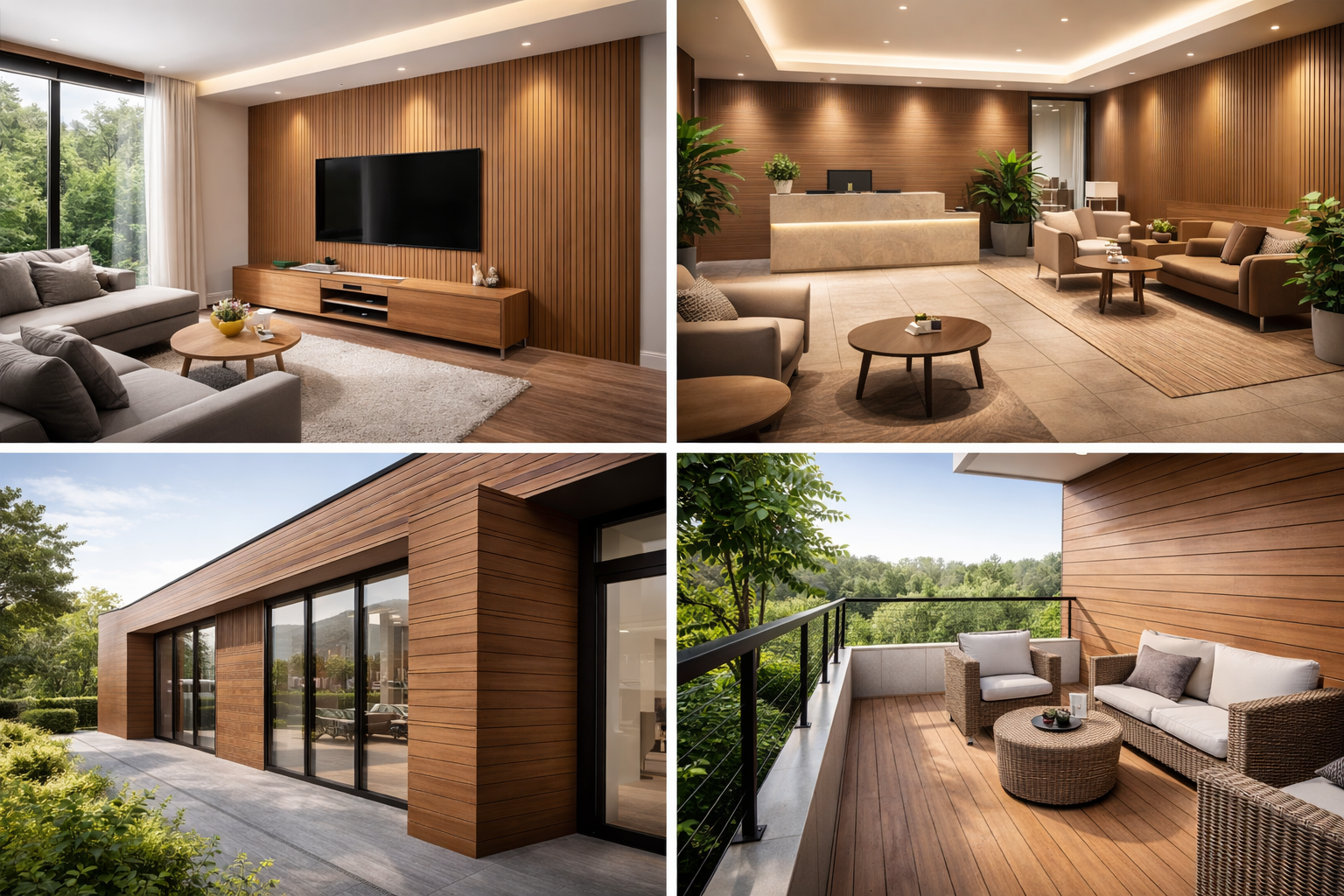
WPC wall panels are used in a wide range of architectural and decorative applications.
Interior Applications
- Living room feature walls
- TV background walls
- Hotel lobby decoration
- Office interiors
- Retail store wall designs
Exterior Applications
- Building facade cladding
- Balcony wall decoration
- Garden and outdoor wall covering
- Commercial building exteriors
Because of their weather resistance and dimensional stability, WPC panels perform well in both residential and commercial environments.
Advantages Compared with Traditional Wall Materials
WPC wall panels offer several advantages over traditional materials.
| Material | Maintenance | Water Resistance | Installation | Durability |
|---|---|---|---|---|
| Solid Wood | High | Low | Moderate | Medium |
| PVC Panels | Low | High | Easy | Medium |
| Stone Cladding | Very Low | High | Complex | Very High |
| WPC Wall Panels | Low | High | Easy | High |
This balance of appearance, performance, and installation efficiency is one reason why WPC wall panels are becoming widely adopted in modern building projects.
Installation Overview
One of the main advantages of WPC wall panels is their simple installation system. Panels are typically installed using a metal or wooden frame structure with concealed clips or screws.
The general installation process includes:
- Installing a support frame structure
- Fixing starter clips
- Sliding panels into the clip system
- Securing panels with stainless steel screws
- Installing finishing trims and corner profiles
This modular system allows installers to cover large wall areas quickly while maintaining a clean and seamless appearance.
Why WPC Wall Panels Are Growing in Popularity
The global construction industry is increasingly focused on sustainable materials, faster installation, and long-term durability. WPC wall panels meet these requirements by combining eco-friendly materials with advanced manufacturing technology.
As a result, WPC wall panels are now widely used by:
- Building material distributors
- Architects and designers
- Construction contractors
- Interior decoration companies
Their balance of design flexibility, durability, and environmental performance makes them an excellent solution for modern architecture.
Conclusion
WPC wall panels represent a modern evolution of traditional wood-based cladding materials. By combining wood fibers with durable polymers, they provide a material that is attractive, durable, and easy to maintain.
Whether used for interior feature walls or exterior architectural cladding, WPC panels offer a practical and stylish solution for contemporary construction and design projects.
As demand for sustainable and low-maintenance building materials continues to grow, WPC wall panels are expected to play an increasingly important role in the future of architectural design.
WPC Wall Panel vs PVC Wall Panel : Key Differences, Pros & Best Choice Guide
Discover the key differences between WPC wall panels and PVC wall panels. Learn about durability, cost, installation, and applications to choose the best wall cladding solution for your project.